Earth Day 2025, 55th Anniversary


Published: April 21, 2025
Learn about Earth Day from the Environmental Protection Agency.
The first Earth Day was held in San Francisco in 1970 after Senator Gaylord Nelson of Wisconsin called for teach-ins on college campuses nationwide to raise awareness of environmental issues. The initial focus was on the United States and the negative impacts of 150 years of industrial development. Earth Day 1970 led to the establishment of the Environmental Protection Agency (EPA), and it also indicated the beginning of new environmental laws to start the environmental legislative agenda, including passage of the Clean Air, Clean Water, and the Endangered Species Acts.
In 1990, Earth Day became a global event coordinated by the Earth Day Network . The Earth Day Network’s mission is to diversify, educate, and activate the environmental movement worldwide. This year’s theme, "Our Power, Our Planet" focuses on renewable energy and its importance for people and the planet. We can achieve this by championing solar, wind, hydroelectric, geothermal, and tidal-generated energy. Read more about The Earth Day Network's commitment to harnessing renewable energy and building a healthy, sustainable future on their website. As defined in "42 U.S.C. § 15852(b)" , renewable energy is marine energy ("as defined in 42 U.S.C. § 17211)" or electric energy generated from solar, wind, biomass, landfill gas, geothermal, municipal solid waste, or new hydroelectric generation capacity achieved from increased efficiency or additions of new capacity at an existing hydroelectric project.
* Check out EPA resources: Lesson Ideas for Teachers , Homework Resources for Students , and Community Service Project Ideas .
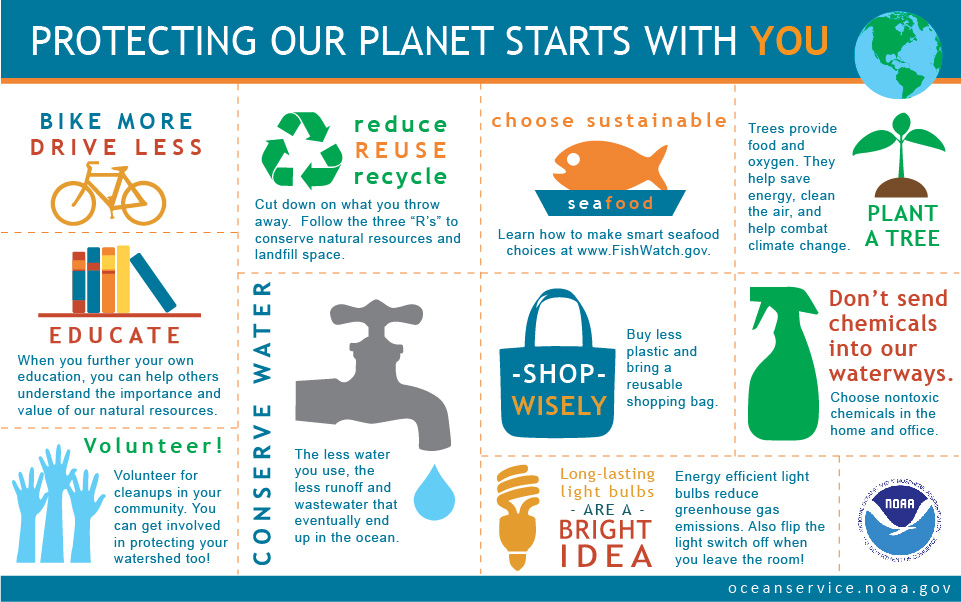
* Find ways to celebrate Earth Day by volunteering or conserving at home, on the National Park Service's (NPS) website. .
* To support the celebration of Earth Day, The U.S. Government Publishing Office offers for sale new and classic official environmental publications that present both scientific and practical information to protect and improve the nation's air, foster the protection of plant and animal species and their habitats, help protect human health, and promote a cleaner and healthier environment for the American people.
Clean Air Act and Amendments
- Clean Air Act*
- Clean Air Act Amendments of 1977*
- Clean Air Act Amendments of 1990*
- 77 Stat. 392 - Clean Air Act - December 17, 1963
- 81 Stat. 485 - Air Quality Act of 1967 - November 21, 1967
- 84 Stat. 1676 - Clean Air Act Amendments of 1970 – December 31, 1970
- 91 Stat. 685 - Clean Air Act Amendments of 1977 - August 7, 1977
- 104 Stat. 2399 - Clean Air Act Amendments of 1990 - November 15, 1990
- 42 U.S.C. 7401 - Clean Air Act
Clean Water Act and Amendments
- Safe Drinking Water Act*
- Clean Water Act (Federal Water Pollution Control Act)*
- 86 Stat. 816 - An Act to amend the Federal Water Pollution Control Act - October 18, 1972
- 91 Stat.1566 - Federal Water Pollution Control Act Amendments - December 27, 1977
- 101 Stat. 7 - Water Quality Act of 1987 - February 4, 1987
- 33 U.S.C. 26 - Water Pollution Prevention and Control
Other Legislation
- Endangered Species Act of 1973*
- Toxic Substances Control Act - October 11, 1976*
- 83 Stat. 852 - National Environmental Policy Act of 1969 - January 1, 1970
- 87 Stat. 884 - Endangered Species Act - December 28, 1973
- 94 Stat. 2767 - Comprehensive Environmental Response, Compensation, and Liability Act of 1980 (CERCLA) - December 11, 1980
- 102 Stat. 2779 - Plastic Pollution Control Act of 1987 - October, 28, 1988
*This links to a Statute Compilation, which is a compilation of the public law, as amended, and is an unofficial document and should not be cited as legal evidence of the law. Learn more.
Additional Resources
- EPA Summary of the Clean Air Act - 42 U.S.C. s7401 et seq. (1970)
- EPA Summary of the Clean Water Act - 33 U.S.C. s1251 et seq. (1972)
- EPA History: Earth Day