National History Day® 2026-2027


Published: August 12, 2026
National History Day® (NHD) is a non-profit education organization established in 1974 that provides educational programs helping students and teachers influence the future through discovery of the past. The National History Day® Contest is a year-long academic program focused on historical research, interpretation, and creative expression for 6th to 12th-grade students. The experience ends with a series of contests at the local and affiliate levels and an annual national competition in the Nation's Capital area in June.
"The theme for National History Day® (NHD) 2027 is Innovation in History: Impact, Influence, Change. Innovation goes beyond creating new tools or devices to finding new ways of thinking, organizing, and influencing society. To put it simply, innovation, at its core, is about change and the impact of that change. To fully explore innovation in a historical context, we must look beyond the idea itself and examine its effects. How did people, over time, imagine, develop, and implement new ideas, technologies, or methods? And in what ways did those innovations influence societies?" Source: National History Day®
GPO's GovInfo provides access to a wealth of official publications from all three branches of the Federal Government to assist students and educators with their project research. In addition to viewing the resources linked on this page, be sure to:
- Check out What’s Available to see publications by collection and examples of content, and
- Head to the Tutorials and Handouts page for information that will help guide students through the search process.
Samples of Content on GovInfo Related to This Year's Theme
Searches
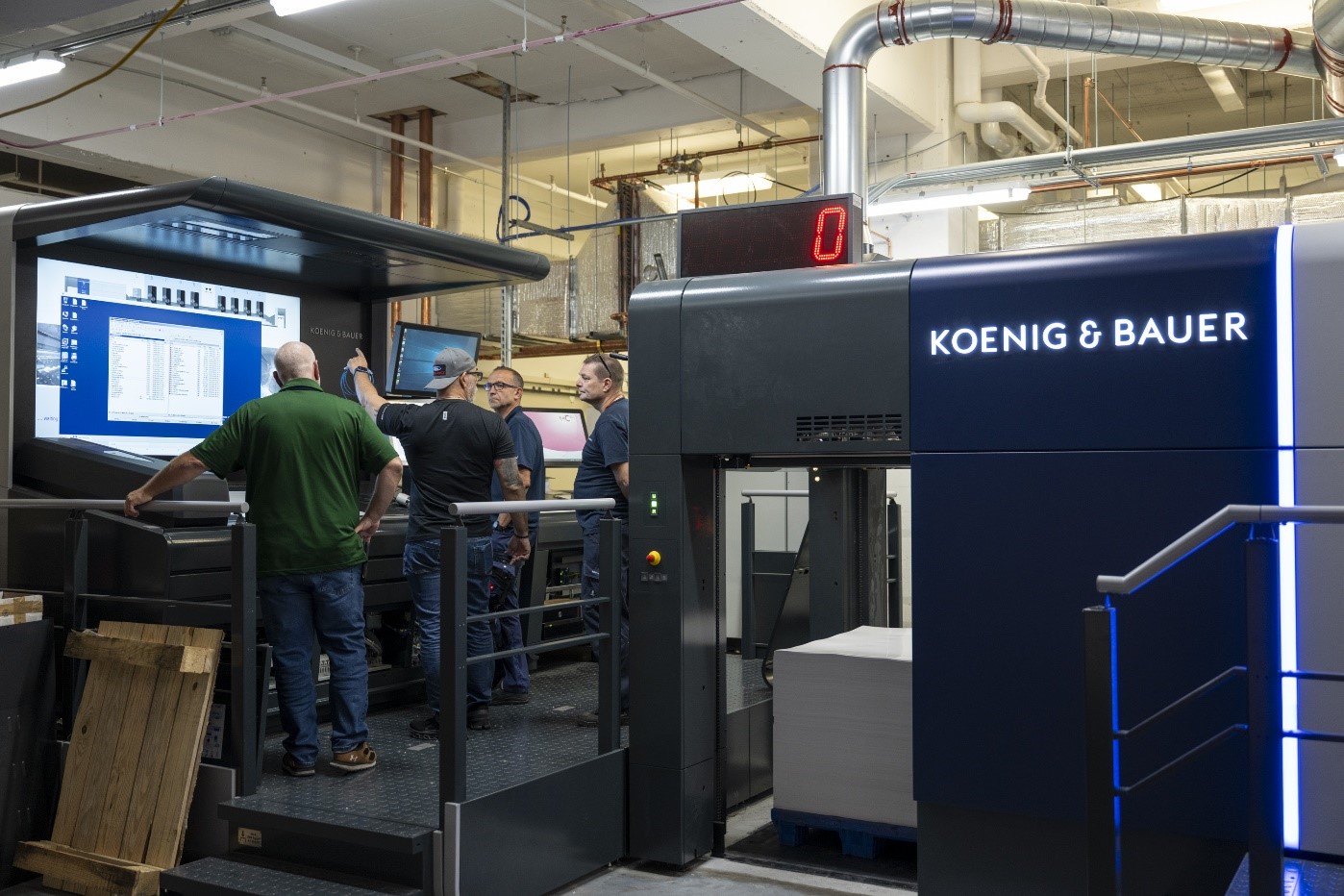
Print and Technology - (GPO Collection)
Sample Search - Example: Search for Bills by Title - This example will search for bills with the word innovation in the full title or short title. Using Basic Search, enter: collection:bills and title:innovation, or using Advanced Search, select Congressional Bills under Refine by Collection, then under Search In select Title in the first box and enter innovation in the second box.
Committees
Legislation
- 121 Stat. 572 - America COMPETES Act (America Creating Opportunities to Meaningfully Promote Excellence in Technology, Education, and Science Act) 8/9/2007 - An act to invest in innovation through research and development, and to improve the competitiveness of the United States.
- 117 Stat. 1177 - Check Clearing for the 21st Century Act - An act to facilitate check truncation by authorizing substitute checks, to foster innovation in the check collection system without mandating receipt of checks in electronic form, and to improve the overall efficiency of the Nation's payments system, and for other purposes.
- 131 Stat. 91 - Weather Research and Forecasting Innovation Act of 2017 4/18/2017 - An act to improve the National Oceanic and Atmospheric Administration's weather research through a focused program of investment on affordable and attainable advances in observational, computing, and modeling capabilities to support substantial improvement in weather forecasting and prediction of high impact weather events, to expand commercial opportunities for the provision of weather data, and for other purposes.
- 128 Stat. 2035 - Sunscreen Innovation Act 11/26/2014 - An act to amend the Federal Food, Drug, and Cosmetic Act to provide an alternative process for review of safety and effectiveness of nonprescription sunscreen active ingredients and for other purposes.
- Public Law 119 - 83 - Small Business Innovation and Economic Security Act - This act reauthorizes funding through FY2031. It modifies the Small Business Innovation Research (SBIR) program, the Small Business Technology Transfer (STTR) program, and related pilot programs. (The SBIR and STTR programs are administered by various Federal agencies and provide competitive awards for domestic small businesses to conduct research and development projects that have the potential for commercialization.)
"Known collectively as “America’s Seed Fund," the SBIR and STTR programs provide technology-focused small businesses with early-stage funding to commercialize their ideas and bring new innovations to market. The programs connect university research to entrepreneurs and startups and ensure that federally funded discoveries do not gather dust in labs, but instead are turned into real-world applications."
Other Related Documents
- Executive Order 14409 -Promoting Advanced Artificial Intelligence Innovation and Security (2026)
- Precision Agriculture in the Digital Era: Recent Adoption on U.S. Farms* (2023) - Digital agriculture (DA)—the ongoing transformation of farming that includes digitalization and automation of farming tasks. The report analyzes farmers’ adoption rates of DA for soil maps, yield maps, yield monitors, VRT, auto-steer and guidance systems, and aerial imagery across six major crops: corn, cotton, rice, sorghum, soybeans, and winter wheat.
- Innovations for the 2020 Census: Interim Report* (2020) - This document chronicles the innovations associated with the 2020 Census, including streamlining operations and improved technology.
- Emerging Technologies to Support an Aging Population: A Report (Science & Technology Policy Office)* (2019) - This report identifies a range of emerging technologies that have significant potential to assist older adults, and it is offered as a guide for both public and private sector research and development (R&D) to improve the quality of life, enhance individual choice, reduce caregiver stress, and cut healthcare costs.
- Reimagining the Role of Technology in Higher Education: A Supplement to the National Educational Technology Plan* (2017)
- H. Rept. 114-681 - Electricity Storage Innovation Act (2016) - This 2016 report was intended to expand theoretical and fundamental knowledge to control, store, and convert electrical energy to chemical energy.
- Best of Both Worlds: Museums, Libraries, and Archives in a Digital Age* (2013) - "Libraries and archives were among the early adopters of digital technology. With their “open access” ethic, they embraced both digitization and social networking early on and began to ask, What would the model look like if visitors could explore the collections on their own terms?”
- Sixty Years of Innovation and Problem Solving: Technology and Development in the USDA Forest Service* (2005) - This program helps the USDA Forest Service manage the Nation's natural resources more efficiently and more safely.
- The Limitless Sky: Air Force Science and Technology Contributions to the Nation* (2004) - This publication was a journey in which the Air Force science and technology enterprise has made immeasurable contributions to the development of air power, to the nation’s science and technology base, and to understanding of our world.
- Using Biometric Identification Technologies in the Election Process – Federal Election Commission* (2001)

Browse through GovInfo Collections
Compilation of Presidential Documents — This collection is composed of the daily compilation of Presidential documents. It includes such material as proclamations, speeches, and press conferences, to name a few.
Congressionally Mandated Reports (Browse by Topic) — Reports that are required by statute to be submitted by Federal agencies to the Senate, the House of Representatives, or to congressional committees or subcommittees.
Congressional Bills — Congressional bills are legislative proposals from the House of Representatives and Senate within the United States Congress.
Congressional Committee Prints — Congressional Committee Prints are publications issued by Congressional Committees that include topics related to their legislative or research activities, as well as other matters such as memorial tributes.
Congressional Documents — The Congressional Documents collection consists of House and Senate documents, Senate Executive documents, and Senate Treaty documents.
Congressional Hearings — A hearing is a meeting or session of a Senate, House, joint, or special committee of Congress, usually open to the public, to obtain information and opinions on proposed legislation, conduct an investigation, or evaluate/oversee the activities of a government department or the implementation of a Federal law.
Congressional Record — The official record of the proceedings and debates of the United States Congress. See issues before 1994 in the Bound Congressional Record. At the end of each session of Congress, all of the daily Congressional Record editions are collected, re-paginated, and re-indexed into a permanent, bound edition.
Congressional Reports — Congressional reports originate from congressional committees and deal with proposed legislation and issues under investigation.
Federal Register — Provides a uniform system for making regulations and legal notices issued by Federal agencies available to the public. The public can participate and impact Federal rules and regulations at www.regulations.gov. In addition, FederalRegister.gov, an HTML edition of the Federal Register, is available from the Office of the Federal Register (OFR), National Archives and Records Administration (NARA). Finally, the Electronic Code of Federal Regulations (eCFR), a currently updated, unofficial version of the Code of Federal Regulations, is also available.
NIST — The National Institute of Standards and Technology (NIST) is a non-regulatory federal agency within the U.S. Department of Commerce. NIST's mission is to promote U.S. innovation and industrial competitiveness by advancing measurement science, standards, and technology in ways that enhance economic security and improve our quality of life.
NSA’s The Next Wave — The Next Wave (TNW) is a journal discussing the research and technological innovation taking place at the National Security Agency.
Public and Private Laws — Public and private laws are also known as slip laws. A slip law is an official publication of the law and is competent evidence admissible in all state and Federal courts and tribunals of the United States. Public laws affect society as a whole, while private laws affect an individual, family, or small group.
Supreme Court Cases in the United States Reports — The cases of the Supreme Court of the United States are published officially in the United States Reports.
United States Code — The United States Code is the codification by subject matter of the general and permanent laws of the United States.
United States Statutes at Large — The United States Statutes at Large, typically referred to as the Statutes at Large, is the permanent collection of all laws and resolutions enacted during each session of Congress.
Other Resources
Browse the U.S. GPO Government Bookstore for thousands of Federal Government publications. Search GPO's Catalog of U.S. Government Publications (CGP) to find additional publications related to your topics. The CGP is the discovery tool for federal publications, providing descriptive information for historical and current publications and direct links to the full document, when available.Search DiscoverGov for simple, one-stop searching across multiple U.S. Federal Government databases, including GPO's Catalog of U.S. Government Publications (CGP) and GovInfo. It will retrieve reports, articles, and citations, providing direct links to selected online resources and publications.
View a list of external resources and websites.
*This links to a Statute Compilation, which is a compilation of the public law, as amended, and is an unofficial document and should not be cited as legal evidence of the law. Learn more.