National Disability Employment Awareness Month 2026


Published: October 8, 2026

National Disability Employment Awareness Month (NDEAM) recognizes and celebrates the many contributions American workers with disabilities make to our workplaces and economy. It is also a time to recommit to expanding and supporting opportunities for those with disabilities. Led by the U.S. Department of Labor's (DOL) Office of Disability Employment Policy (ODEP), NDEAM emphasizes supportive and inclusive policies and practices that will benefit employees and employers.
This year’s theme, “Celebrating Value and Talent,” carries the spirit of last year’s celebration forward through 2026 in honor of America’s 250th birthday.
In 1945, Congress established the first week in October (National Employ the Physically Handicapped Week) to encourage employment of persons with disabilities, which over time expanded to become a month-long awareness and recognition of all forms of visible and invisible disabilities.
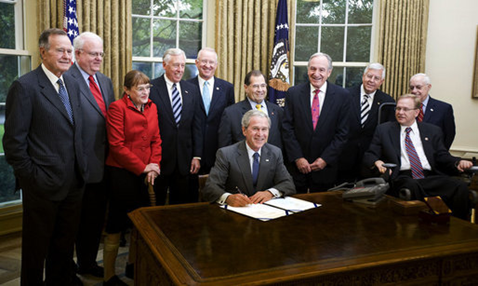
Although advocacy for disability rights has existed since the 19th century, Congress's actions in the 20th and 21st centuries created more awareness, education, and outreach. The Rehabilitation Act of 1973 (RHA)* and the Americans with Disabilities Act of 1990 (ADA)* are key pieces of legislation that provide Federal government agencies with compliance and education. Signed into law by President George H.W. Bush, the ADA is a Federal civil rights law prohibiting discrimination against people with disabilities in everyday activities. The ADA defines disability as "a physical or mental impairment that substantially limits one or more major life activities." A person with a disability is someone who:
- has a physical or mental impairment that substantially limits one or more major life activities,
- has a history or record of such an impairment (such as cancer that is in remission) or
- is perceived by others as having such an impairment (such as a person who has scars from a severe burn).
The Civil Rights Division within the Department of Justice is responsible for enforcing Federal statutes prohibiting discrimination based on disability. Learn more about their Disability Rights Section and its mission to "advance the nation's goal of equal opportunity, integration, full participation, inclusion, independent living, and economic self-sufficiency for people with disabilities through enforcement, regulation, and technical assistance."
Modifications to the Regulations Implementing Section 503 of the Rehabilitation Act of 1973, as Amended (91 FR 54482 - August 21, 2026)
The revisions align the regulations with applicable law and recent executive orders, including Executive Order 14173 (1/21/25), "Ending Illegal Discrimination and Restoring Merit-Based Opportunity", and Executive Order 14219 (2/19/25), "Ensuring Lawful Governance and Implementing the President's Department of Government Efficiency' Deregulatory Initiative."
This rule is effective September 21, 2026, except for amendatory instruction 1, which is effective on December 21, 2026.
Additional Legislation
- 36 U.S.C. 121 - National Disability Employment Awareness Month
- 42 U.S.C. 126 - Equal Opportunity for Individuals with Disabilities
- 28 CFR 35 - Nondiscrimination on the Basis of Disability in State and Local Government Services
- 28 CFR 36 - Nondiscrimination on the Basis of Disability by Public Accommodations and in Commercial Facilities
- 28 CFR 37 - Procedures for Coordinating the Investigation of Complaints or Charges Based on Disability Subject to the Americans With Disabilities Act and Section 504 of the Rehabilitation Act of 1973
- On April 24, 2024, the Federal Register published the Department of Justice’s final rule updating its regulations for Title II of the Americans with Disabilities Act (ADA). Read about this final rule's specific requirements for how state and local government programs and activities must ensure that web content and mobile applications (apps) are accessible to people with disabilities.

Additional Resources
- Explore how to celebrate NDEAM as an employee or employer by visiting the Department of Labor's ODEP webpage, and check out DOL's What Can You Do? webpage to find out more about their Campaign for Disability Employment (CDE) and how you can get involved.
- Take a look at the Library of Congress's Disability Law in the United States: A Beginner's Guide. This research guide covers a variety of resources surrounding the Americans with Disabilities Act and other topics related to disability law, including information about relevant Federal agencies, service animals, and veterans' resources.
*This links to a Statute Compilation, which is a compilation of the public law, as amended, and is an unofficial document and should not be cited as legal evidence of the law. Learn more.